The animation, gaming and visual-effects industries are growing rapidly, creating exciting career opportunities for skilled 3D artists. One of the most important stages in the 3D animation production process is rigging. Rigging transforms a static 3D model into a flexible digital character that animators can move, pose and bring to life.
Students who want to develop technical as well as creative skills can consider joining a 3D Rigging Course at Arena Animation Salt Lake. The course helps learners understand character structure, control systems and animation-ready model preparation through practical training and industry-oriented projects.
What Is 3D Rigging?
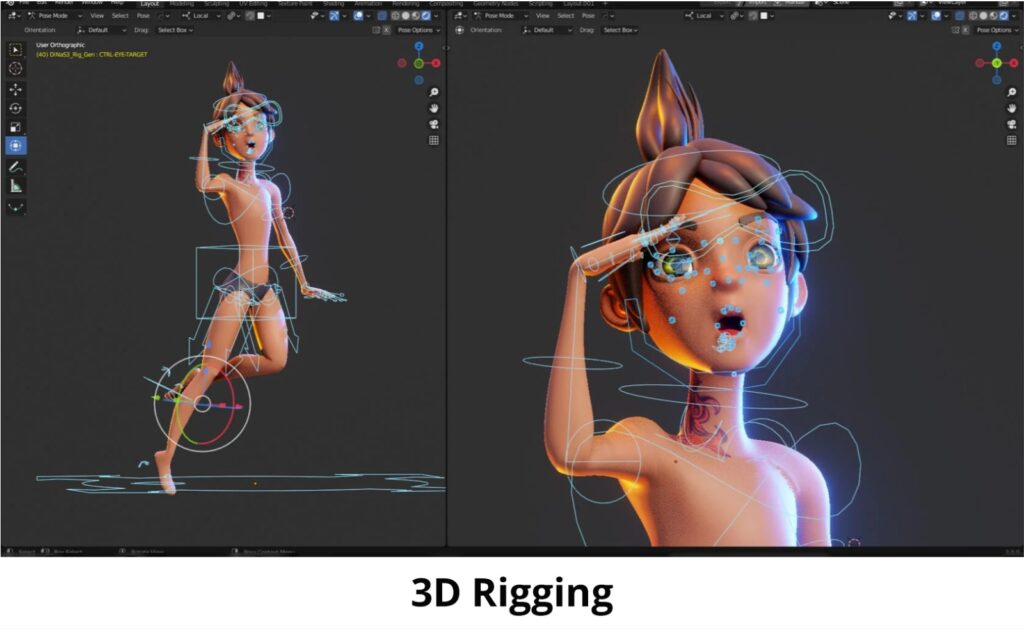
3D rigging is the process of creating a digital skeleton inside a 3D character or object. This skeleton contains bones, joints, controls and deformers that allow the model to move realistically.
A professional rigging artist ensures that characters can walk, run, jump, speak and express emotions naturally. Rigging is used not only for human characters but also for animals, creatures, vehicles, mechanical objects and fantasy characters.
For example, before an animator can make a character wave its hand, the rigging artist must create the necessary arm joints and control handles. A well-designed rig makes the animation process faster, smoother and more accurate.
Why Learn 3D Rigging at Arena Animation Salt Lake?
Rigging is an excellent career option for students who enjoy both art and technology. It requires an understanding of anatomy, movement, problem-solving and 3D software.
Learning 3D rigging can help students:
- Understand how digital characters are prepared for animation
- Create skeletons, joints and character-control systems
- Develop realistic facial and body movements
- Work with deformation tools and skin weights
- Build animation-friendly character rigs
- Improve technical problem-solving skills
- Prepare a professional rigging portfolio
Rigging artists are an essential part of animation studios, gaming companies, VFX production houses and digital-content teams.
What You Can Learn in the 3D Rigging Course at Arena Animation Salt Lake?
The course can introduce students to the complete rigging workflow, beginning with fundamental concepts and progressing towards more advanced character setups.
Understanding Character Anatomy
Students learn how bones, joints and muscles influence human and animal movement. A basic understanding of anatomy helps rigging artists place joints correctly and create believable character motion.
Joint and Skeleton Creation
Learners understand how to create a skeleton structure for a 3D model. They practise positioning joints for the spine, arms, legs, fingers, neck and facial areas.
Forward and Inverse Kinematics
Forward Kinematics, or FK, and Inverse Kinematics, or IK, are commonly used rigging techniques. Students learn how these systems help animators control character movement efficiently.
Skinning and Weight Painting
Skinning connects the 3D model to its digital skeleton. Weight painting determines how different parts of the model deform when the joints move. Proper skinning helps prevent unnatural bending and distortion.
Character-Control Systems
Students learn how to create user-friendly controllers for animators. These controls make it easier to move the character’s body, hands, feet, eyes and facial features.
Facial Rigging
Facial rigging allows characters to speak and express emotions. Learners may explore facial controls, eye movement, lip-sync preparation, expressions and blend shapes.
Mechanical and Prop Rigging
Rigging is not limited to characters. Students may also learn how to rig vehicles, machines, doors, weapons and other movable objects used in animation and gaming projects.
Rig Testing and Troubleshooting
A rig must be tested before it is given to the animation team. Students learn how to identify deformation problems, broken controls and movement limitations.
Practical and Project-Based Learning
Rigging requires regular practice. At Arena Animation Salt Lake, students can develop their skills by working on practical exercises and portfolio-oriented assignments.
Projects may include:
- Basic character skeleton setup
- Human character rigging
- Cartoon character rigging
- Facial-expression controls
- Animal or creature rigging
- Mechanical-object rigging
- Walk-cycle-ready character setup
- Final rigging showreel
These projects can help learners demonstrate their technical ability when applying for internships or entry-level jobs.
Software Skills for 3D Rigging
Students may work with professional 3D-production tools commonly used for modelling, rigging and animation. Depending on the course structure, learners can become familiar with software such as Autodesk Maya and other relevant digital-production tools.
Along with software knowledge, students should focus on understanding movement, anatomy, control design and deformation. Strong fundamentals are often more valuable than simply knowing where different software tools are located.
Career Opportunities After Learning 3D Rigging
After completing the course and building a strong portfolio, learners can explore roles such as:
- 3D Rigging Artist
- Character Rigging Artist
- Technical Animator
- Creature Rigging Artist
- Facial Rigging Artist
- Character Technical Director
- 3D Animation Artist
- Game Rigging Artist
- Junior Technical Artist
Career opportunities may be available in animation studios, gaming companies, advertising agencies, film-production houses, VFX studios, e-learning companies and digital-content organisations.
Who Can Join the Course?
The 3D Rigging Course can be suitable for:
- Students interested in animation and gaming
- Beginners exploring careers in 3D production
- 3D modelling students who want to expand their skills
- Animators who want to understand character setup
- Graphic designers moving into 3D design
- Creative professionals seeking technical animation skills
Previous rigging experience may not always be necessary, but basic computer knowledge, patience and an interest in character movement can be helpful.
Why Choose Arena Animation Salt Lake?
Arena Animation Salt Lake offers a creative learning environment where students can explore animation, VFX, gaming and digital-design skills. Through practical training, assignments and mentor guidance, learners can work towards building industry-relevant knowledge and a professional portfolio.
Students can benefit from:
- Practical software training
- Experienced faculty guidance
- Project-based learning
- Portfolio-development support
- Exposure to production workflows
- Creative classroom activities
- Career-oriented skill development
Start Your Journey as a 3D Rigging Artist
Every memorable animated character begins with a strong technical foundation. Rigging is the invisible structure that makes movement, expression and storytelling possible.
By joining a 3D Rigging Course at Arena Animation Salt Lake, students can learn how to convert static models into animation-ready characters. With consistent practice, technical knowledge and a creative portfolio, learners can take an important step towards a career in animation, gaming and visual effects.
Enrol today and begin your journey into the exciting world of 3D character rigging at Arena Animation Salt Lake.
Frequently Asked Questions
Is 3D rigging difficult to learn?
Rigging requires patience and practice, but students can gradually develop their skills by learning joints, controls, skinning and character movement step by step.
Is drawing knowledge required for rigging?
Advanced drawing knowledge is not compulsory. However, an understanding of anatomy, body proportions and movement can be useful.
Can a beginner join a 3D rigging course?
Yes. Beginners interested in animation and 3D production can start by learning fundamental rigging concepts before moving to advanced character setups.
What is the difference between modelling and rigging?
Modelling creates the visible shape of a character, while rigging creates the internal skeleton and controls required to animate that model.
Can I work in the gaming industry after learning rigging?
Rigging is widely used in game development. A strong portfolio and knowledge of game-ready character workflows can help learners explore opportunities in gaming studios.
Meta Title: 3D Rigging Course at Arena Animation Salt Lake
Meta Description: Learn character rigging, skeleton creation, skinning, control systems and facial rigging with a career-focused 3D Rigging Course at Arena Animation Salt Lake.
SEO Keywords: 3D Rigging Course in Kolkata, 3D Rigging Course at Arena Animation Salt Lake, Character Rigging Course, Maya Rigging Course, Animation Course in Salt Lake, 3D Animation Institute in Kolkata